

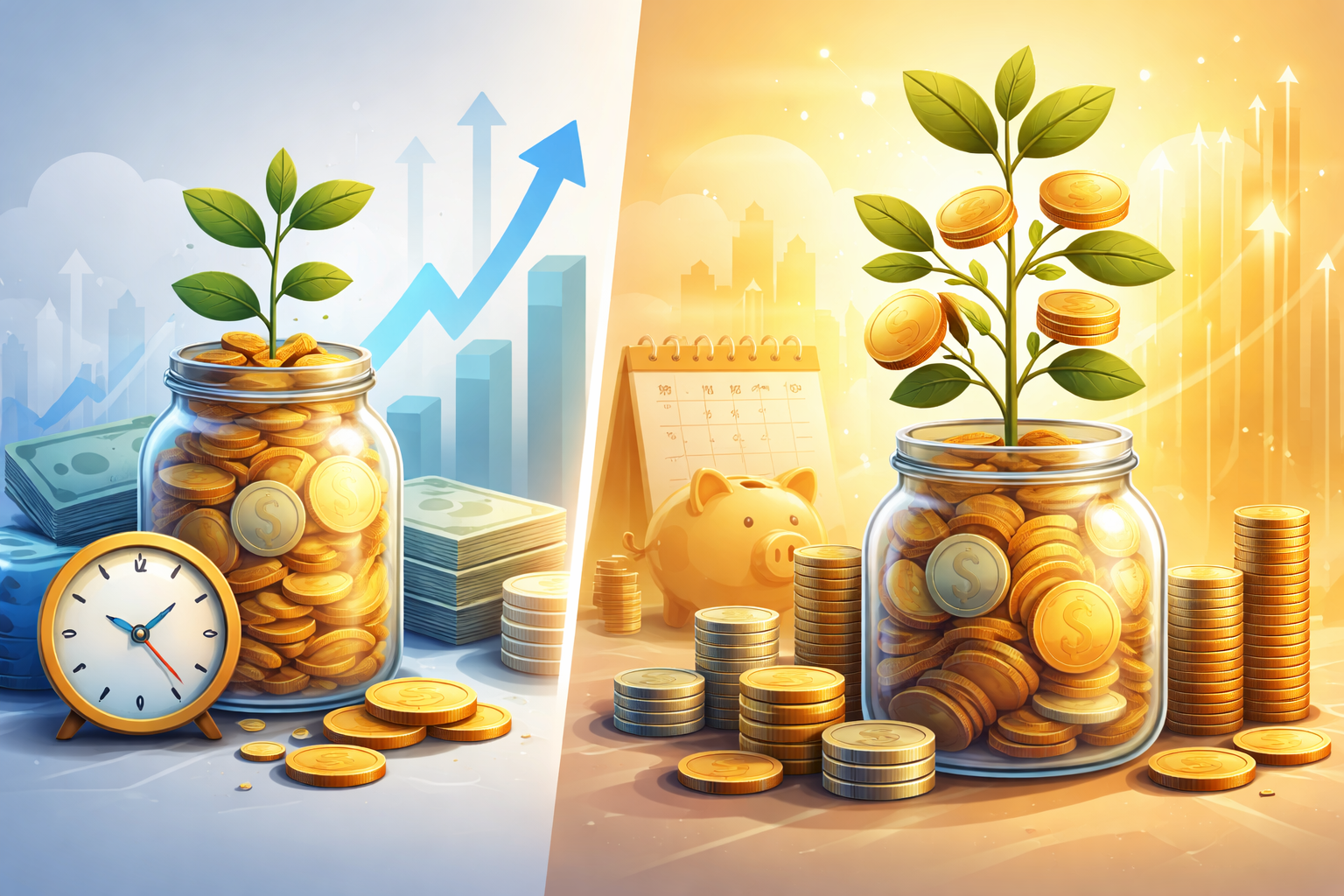
Choosing Between Short and Long Term Investments
When it comes to investing, one of the most common questions is not what to invest in, but how long to invest for.
Short-term and long-term investing serve very different purposes, and choosing between them depends less on market trends and more on your personal goals, timeline, and tolerance for risk.
Understanding the differences between these two approaches can help you build a strategy that aligns with your financial priorities, whether you’re planning a major purchase in the near future or building wealth for decades to come.
What Is Short-Term Investing?
Short-term investing generally refers to strategies focused on achieving returns within a short time frame, usually from a few months up to three years.
The primary objective is liquidity and capital preservation, with limited exposure to market volatility.
Common short-term investment options include high-yield savings accounts, money market funds, Treasury bills, certificates of deposit (CDs), and sometimes conservative bond funds.
Some investors may also consider short-term trading strategies, but these come with significantly higher risk.
Short-term investing is often used for goals such as:
- Building an emergency fund;
- Saving for a down payment on a home;
- Covering upcoming education or medical expenses;
- Preparing for a planned purchase in the near future.
The key advantage of short-term investing is stability. You know when you’ll need the money, and you want to minimize the risk of loss.
The trade-off, however, is lower potential returns compared to long-term investments.
What Is Long Term Investing?
Long-term investing is designed for goals that are several years, or even decades, away.
Typically, this approach spans five years or more and focuses on growth over time, taking advantage of compound returns and market appreciation.
Long-term portfolios often include stocks, equity mutual funds, index funds, exchange-traded funds (ETFs), and retirement accounts such as 401(k)s and IRAs.
While these investments may experience short-term fluctuations, history shows that markets tend to reward patience over long periods.
Long-term investing is commonly associated with goals like:
- Retirement planning;
- Building generational wealth;
- Funding long-term education plans;
- Achieving financial independence.
The main benefit of long-term investing is higher growth potential. Time allows you to ride out market volatility and benefit from compounding, which can significantly increase wealth over the years.
Risk, Time Horizon, and Emotional Discipline
One of the biggest differences between short-term and long-term investing is how risk is managed.
Short term investors generally avoid volatility because they don’t have time to recover from losses. Long term investors, on the other hand, accept short term risk in exchange for long-term growth.
Emotional discipline also plays a critical role. Short-term strategies may require frequent monitoring and quick decision-making, which can be stressful and emotionally demanding.
Long-term investing rewards consistency, patience, and the ability to stay invested during market downturns.
Your time horizon often determines how much risk you can reasonably take. The longer your timeline, the more flexibility you have to weather market cycles.
Which Strategy Fits Your Goals?
The choice between short-term and long-term investing is not about picking the “better” option, it’s about choosing the one that fits your objectives.
Ask yourself a few key questions:
- When will I need this money?;
- How much risk can I tolerate without losing sleep?;
- Is my goal stability, growth, or a balance of both?.
If your goal is short-term and non-negotiable, such as buying a home next year, stability should take priority.
If your goal is decades away, such as retirement, growth-oriented investments usually make more sense.
Many investors use a combination of both strategies. For example, they may keep short-term funds in low-risk assets while investing long-term savings in the stock market.
Finding the Right Balance
Successful investing is rarely about choosing one approach exclusively. It’s about aligning each dollar with its purpose.
Short term investing supports immediate and predictable needs, while long-term investing builds wealth and financial resilience over time.
By clearly defining your goals and timelines, you can design a strategy that reduces unnecessary risk and increases confidence in your financial decisions.
In the end, the best investment plan is not the one that promises the highest returns, but the one that fits your life, your goals, and your future.